Antiphon of Christmas Vespers

Antiphon of Christmas Vespers

Hodie Christus Natus Est — This Day the Christ Is Born

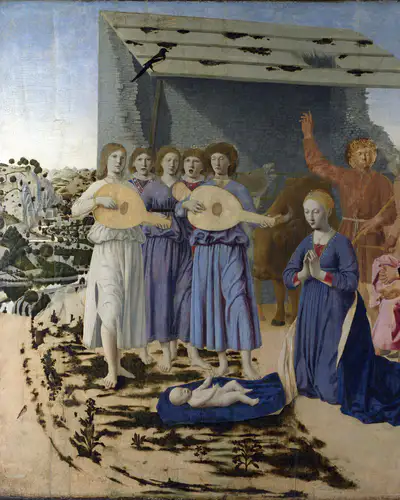
The Magnificat antiphon at Vespers on Christmas Day

LatinEnglish

Hodie Christus natus est:
hodie Salvator apparuit:
hodie in terra canunt Angeli,
laetantur Archangeli:
hodie exsultant iusti, dicentes:
Gloria in excelsis Deo, alleluia.

This day the Christ is born:
this day the Saviour is appeared:
this day the Angels sing praise in the earth,
and the Archangels rejoice:
this day the righteous are glad, and say:
Glory to God in the highest. Alleluia.

SourceAntiphon of Christmas Vespers · The Magnificat antiphon at Vespers on Christmas Day

The history of this prayer

“Hodie Christus natus est” is the antiphon sung with the Magnificat at Second Vespers of Christmas, the evening prayer of 25 December. In a few lines it gathers the whole feast: Christ is born, the Saviour has appeared, the angels sing on earth, the archangels rejoice, the just exult — and all of them end with the angels’ words at Bethlehem, “Glory to God in the highest” (Luke 2:14).

The word that keeps returning is “today”. The liturgy does not speak of Christmas as a distant memory: in the celebration the mystery is made present. The same “today” opens the sermon of St Leo the Great read at Christmas Matins: “Salvator noster, dilectissimi, hodie natus est: gaudeamus” — “Our Saviour, dearly beloved, is born today: let us rejoice.” It is the “today” of the angel to the shepherds: “This day is born to you a Saviour” (Luke 2:11).

In music

The Gregorian chant of the antiphon is sung by choirs the world over, and the text has been set for several voices by Palestrina, Giovanni Gabrieli, Sweelinck and, in the twentieth century, Francis Poulenc. Benjamin Britten used the plainchant melody as the procession and recession of his A Ceremony of Carols (1942).

It may be prayed at home on Christmas Day and throughout the octave, before the crib, with the Magnificat or on its own. In Church Latin, “hodie” is said “OH-dee-eh” and “iusti” “YOO-stee”.

The English is that of the Marquess of Bute’s translation of the Roman Breviary (first published in 1879).

Frequently asked questions

What does Hodie Christus natus est mean?

“Today Christ is born”, or in the old translation, “This day the Christ is born”. It is the opening of the Magnificat antiphon at Vespers on Christmas Day.

When is Hodie Christus natus est sung?

At Second Vespers of Christmas, on the evening of 25 December, with the Magnificat. Outside the liturgy it is sung at Christmas concerts and services.

Who composed Hodie Christus natus est?

The text and its Gregorian melody are anonymous, from the Roman liturgy. There are settings for several voices by Palestrina, Gabrieli, Sweelinck and Poulenc, among others.

Is Hodie in Britten’s A Ceremony of Carols?

Yes. Britten used the plainchant “Hodie Christus natus est” for the procession that opens the work and the recession that closes it.

More prayers: Advent and Christmas

← All the traditional prayers · Prayers and novenas

Schola Gregoriana · CC BY-SA