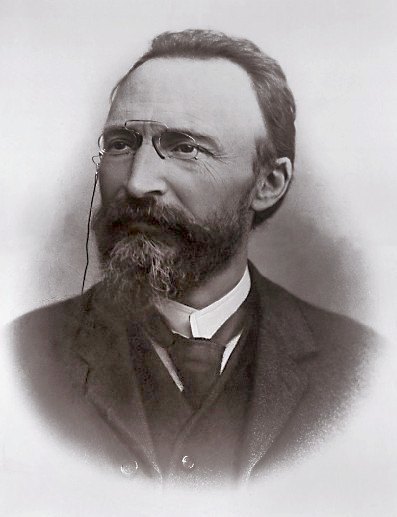
A desperate lawyer, in a valley of marshes and bandits at the foot of Vesuvius, cries out a promise to heaven: “I shall not leave this land without having spread your Rosary here”. It was October 1872, and the man was Bartolo Longo, the “apostle of the Rosary”, canonised by Leo XIV on 19 October 2025. His liturgical memorial is on 5 October, the day of his death in 1926, according to the Dicastery for the Causes of Saints; many Brazilian devotional calendars list him on 29 October. It fits well here, at the close of the month of the Rosary and of the first year since his canonisation.
A lawyer from Latiano
He was born at Latiano (Brindisi) on 10 February 1841. In 1863 he went to Naples to complete his law studies. There, influenced by friends and professors, he drew close to spiritism and abandoned the Catholic faith in which he had been raised.
The way back came through Professor Vincenzo Pepe and the Dominican Fr Alberto Radente, who led him back to the faith and to charity; he became a Dominican tertiary. Through Saint Catherine Volpicelli he met the countess Marianna Farnararo De Fusco, a widow with five children, and in 1872 he went to the Valley of Pompeii to look after her estates.
The voice at Arpaia
He was tormented by a doubt: how could he be saved, after what he had done? Then, it is told, an inner voice said to him: “If you seek salvation, spread the Rosary. It is Mary’s promise. Whoever spreads the Rosary is saved!” He understood his vocation there. The valley was then, according to the Italian Catholic press, marshy, home to a few peasants and open to raids by bandits. He began by teaching the faith to those people.
The painting, the stone and the countess
On 13 November 1875 the image of the Virgin of the Rosary that would mark everything arrived in Pompeii. The biographies say it was an old canvas, worn away by time, brought on a cart. On 13 February 1876 Clorinda, the niece of a benefactress from Naples, at death’s door, was cured through the Virgin’s intercession: it was the day the image was shown to the people, and the healing was taken as a sign that Our Lady approved the work. On 8 May 1876 the foundation stone of the shrine was laid; it was consecrated in 1891, and the façade, inaugurated in 1901, was dedicated to Universal Peace.
On 1 April 1885 Bartolo married the countess Marianna, who was already his partner in the work; she is remembered today as co-founder of the Shrine. Leo XIV said at Pompeii on 8 May 2026 that the two laid “the foundations not only of a temple, but of an entire Marian city”.
In 1883, in answer to Leo XIII’s encyclical on the Rosary (Supremi apostolatus officio, 1 September), Bartolo wrote the Supplication to the Queen of the Holy Rosary. On 14 October that year twenty thousand pilgrims prayed it for the first time at Pompeii.
It is prayed at noon on 8 May and on the first Sunday of October. Leo XIV was elected on 8 May 2025, the day of the Supplication, and went to Pompeii exactly one year later to pray it at the shrine.
The Shrine of charity
Beside the “Shrine of faith” a shrine of charity rose. In 1887 Bartolo opened the girls’ orphanage; in 1892, the hospice for the children of prisoners, which came about when the prisoners themselves asked him to look after their children; in 1897 he founded the Dominican Sisters Daughters of the Holy Rosary of Pompeii. Around the shrine a town grew up, with houses for workers, a telegraph, a railway station, a small hospital and an observatory. He died in the valley of Pompeii on 5 October 1926, aged eighty-five.
John Paul II, beatifying him on 26 October 1980, called him “the apostle of the rosary” and “the man of Our Lady”. Leo XIV counted him at the canonisation among the “benefactors of humanity”, alongside José Gregorio Hernández. The petition for canonisation, submitted in 2024, asked for a dispensation from examining a further miracle.
- Layman, tertiary, lawyer. He was neither priest nor religious: he lived holiness in the world, as a Dominican tertiary.
- The Rosary as a road. In 1877 he published the Quindici Sabati, which developed, said John Paul II, the Christological and contemplative soul of the Rosary.
- Faith and works. While raising the basilica he took in orphans and the children of prisoners.
- The Eucharist in the Rosary. For him all the mysteries of the Rosary are found in the Blessed Sacrament.
“If it is true, I cried, that you promised Saint Dominic that whoever spreads the Rosary is saved, I shall be saved, because I shall not leave this land without having spread your Rosary here.”— Bartolo Longo, in his own account as quoted by the Diocese of Oria (pastoral letter of 5/10/2025)
“The Eucharist is the living Rosary, and all the mysteries are found in the Holy Sacrament in an active and vital form.”— Bartolo Longo, The Rosary and New Pompeii (1914), p. 86, quoted by Leo XIV at Pompeii, 8/5/2026
“Adored holy Mother, in you I place every affliction of mine, every hope, every trust!”— Bartolo Longo, 11 March 1905, quoted by John Paul II at the beatification, 26/10/1980
The prayers
The prayer that cannot be missing is the Supplica: the text is Bartolo Longo’s own (1883), and the full prayer is much longer. Here are the central passages, in the Italian original.
O Augusta Regina delle vittorie, o Vergine sovrana del Paradiso, al cui nome potente si rallegrano i cieli e tremano per terrore gli abissi, o Regina gloriosa del Santissimo Rosario, […]
Che vi costa, o Maria, l’esaudirci? Che vi costa il salvarci? Non ha Gesù riposto nelle vostre mani tutti i tesori delle sue grazie e delle sue misericordie? Voi sedete coronata Regina alla destra del vostro Figliuolo, circondata di gloria immortale su tutti i cori degli Angeli. […] Voi siete l’Onnipotente per grazia. Voi dunque potete salvarci.
O Rosario benedetto di Maria; Catena dolce che ci rannodi a Dio; Vincolo di amore che ci unisci agli Angeli; Torre di salvezza negli assalti d’inferno; Porto sicuro nel comune naufragio, noi non ti lasceremo mai più. Tu ci sarai conforto nell’ora di agonia; a te l’ultimo bacio della vita che si spegne. E l’ultimo accento delle smorte labbra sarà il nome vostro soave, Regina del Rosario della Valle di Pompei, o Madre nostra cara, o unico Rifugio dei peccatori, o sovrana Consolatrice dei mesti. Siate ovunque benedetta, oggi e sempre, in terra e in cielo.
O August Queen of Victories, O sovereign Virgin of Paradise, at whose mighty name the heavens rejoice and the abysses tremble with terror, O glorious Queen of the Most Holy Rosary, […]
What does it cost you, O Mary, to hear us? What does it cost you to save us? Has not Jesus placed in your hands all the treasures of his graces and of his mercies? You sit crowned as Queen at the right hand of your Son, surrounded with immortal glory above all the choirs of Angels. […] You are the Almighty by grace. You, then, can save us.
O blessed Rosary of Mary, sweet chain that binds us to God, bond of love that unites us to the Angels, tower of salvation in the assaults of hell, safe harbour in the common shipwreck, we shall never leave you again. You will be our comfort in the hour of agony; to you the last kiss of a life that is going out. And the last sound of our pale lips will be your sweet name, Queen of the Rosary of the Valley of Pompeii, O our dear Mother, O sole Refuge of sinners, O sovereign Consoler of the sorrowful. Be blessed everywhere, today and always, on earth and in heaven.
So be it. — Amen.
And between the parts of the Supplication the Salve Regina, the antiphon of the Rosary, is prayed:
Salve, Regína, Mater misericórdiæ, vita, dulcédo et spes nostra, salve. Ad te clamámus, éxsules fílii Evæ. Ad te suspirámus, geméntes et flentes in hac lacrimárum valle. Eia ergo, advocáta nostra, illos tuos misericórdes óculos ad nos convérte. Et Iesum, benedíctum fructum ventris tui, nobis post hoc exsílium osténde. O clemens, O pia, O dulcis Virgo María.
Hail, holy Queen, Mother of mercy, our life, our sweetness and our hope. To thee do we cry, poor banished children of Eve. To thee do we send up our sighs, mourning and weeping in this valley of tears. Turn then, most gracious advocate, thine eyes of mercy toward us; and after this our exile, show unto us the blessed fruit of thy womb, Jesus. O clement, O loving, O sweet Virgin Mary.
Amen.
Sancte Bartholomæe Longo, ora pro nobis. Saint Bartolo Longo, pray for us — and win us the confidence to spread the Rosary without leaving the place where we stand.
- Our Lady of the Rosary — Lepanto and the Hail Marys, on the 7th.
- How to pray the Rosary, step by step — the complete guide.
- Novena to Our Lady of the Rosary — nine days of prayer.
- Words of the saints — a growing collection, in English and Portuguese.

Comments