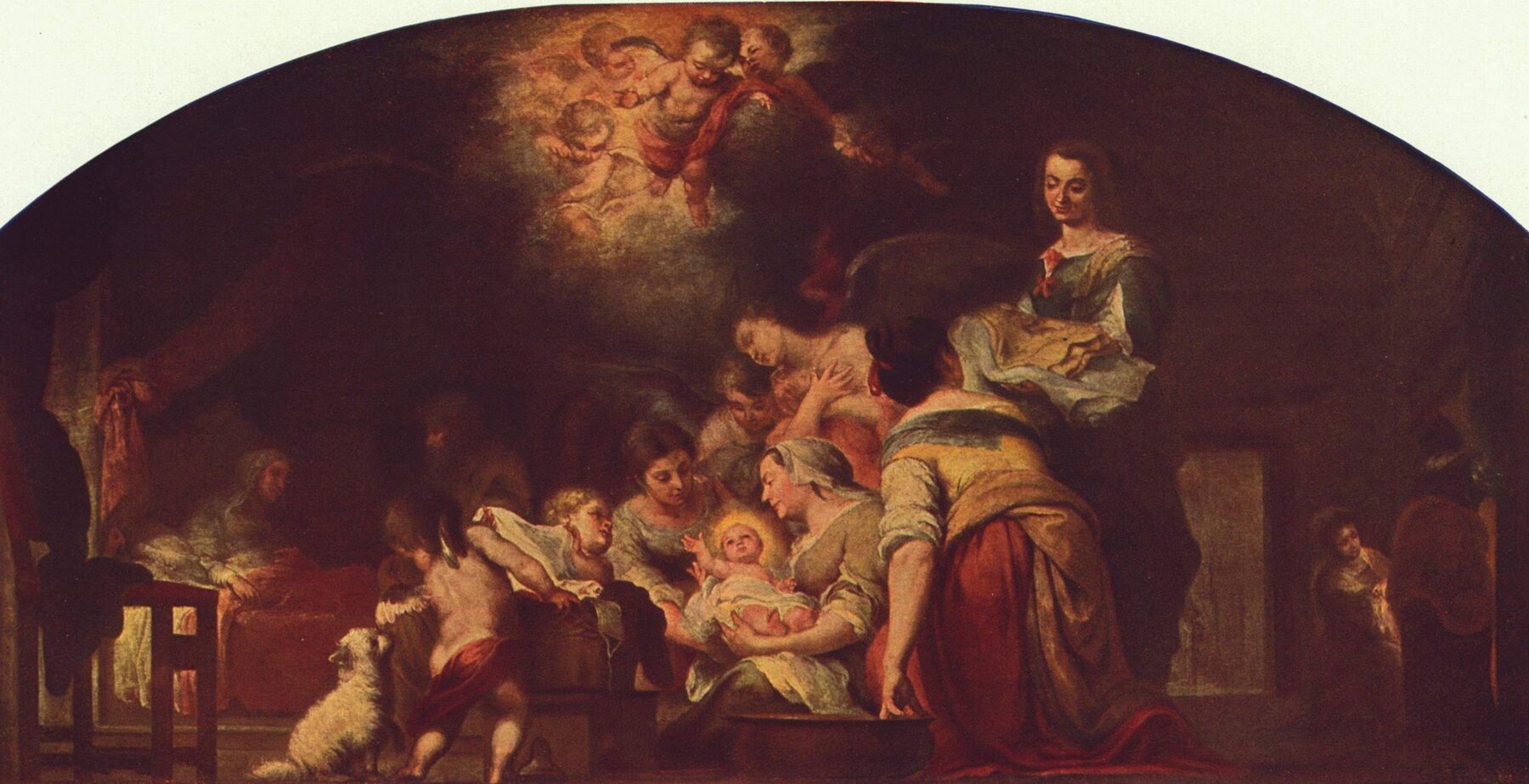
Today, 8 September, the Church keeps the Nativity of Our Lady. Notice something that usually slips past: the calendar is full of saints’ feasts, and almost none of them mark the day the saint was born. They mark the day he died. Only three birthdays are kept — and the reason why says more about this feast than any praise could.
Why the Church almost never keeps birthdays
A saint’s feast falls, nearly always, on the day of his death. The early Church called that day the dies natalis — the birthday. That is not irony or a soft word: for someone who dies in Christ, the day of death is the day he is born for good.
To be born on earth, by contrast, is to be born with original sin. There is nothing to celebrate in a beginning that already comes wounded. So the calendar keeps silence over nearly everyone’s birthday.
The three exceptions are exactly the ones where that silence would make no sense:
- The Nativity of the Lord, 25 December. God made man, without shadow of sin.
- The birth of Saint John the Baptist, 24 June. Sanctified in the womb, when he leapt for joy at Mary’s arrival (Lk 1:44).
- The Nativity of Mary, 8 September. Conceived without original sin, she was born already full of grace.
Which is to say: the Church keeps Mary’s birthday because she believes in the Immaculate Conception. The two feasts hold each other up.
Where 8 September comes from
Almost everyone does the sum backwards: 8 December is the Immaculate Conception, and nine months later gives 8 September. The arithmetic works, but historically it went the other way — the feast of the birth came first, and the conception was counted back from it.
The likely origin is the dedication of a basilica in Jerusalem, built on the site tradition pointed to as the house of Joachim and Anne, beside the Sheep Pool — today the church of Saint Anne. The feast appears in the East between the fifth and sixth centuries and reaches Rome in the seventh, when Pope Sergius I numbered it among the four Marian feasts kept with a procession through the city.
The names of Mary’s parents are not in Scripture. They come from a second-century writing, the Protoevangelium of James, which the Church has never received as inspired.
And yet she kept the names. Not because the document is reliable throughout — it is not — but because the memory that the Mother of the Lord had a father and a mother, a house and a childhood, is itself part of the faith: God did not enter the world by a shortcut. He entered by a family.
What is being celebrated, when a birth is celebrated
A girl is born in an ordinary house in Palestine and nobody, that day, knows anything. There is no angel at the door, no star. The neighbours heard that a daughter had been born, and that was all.
That is the force of the feast. God’s plan began to turn into flesh in a room with no witnesses, on a day nobody wrote down. When the Church sings that her birth proclaimed joy to the whole world, she is saying something that can only be seen backwards — and which may well be true of your own day today, which looks to you like every other one.
“This is the beginning of salvation; this is the day on which our joy was prepared.”— Saint Andrew of Crete, Homily on the Nativity of the Virgin
“Mary conceived in her mind before she conceived in her womb.”— Saint Augustine
“God could make a better world. A better mother than the Mother of God, He could not.”— attributed to Saint Bonaventure
The prayers of the day
The antiphon Nativitas tua has been sung on this feast since the Middle Ages. Notice what it does: her birth announces His, the way the dawn announces the sun.
Natívitas tua, Dei Génetrix Virgo, gáudium annuntiávit univérso mundo: ex te enim ortus est sol iustítiæ, Christus Deus noster; qui solvens maledictiónem, dedit benedictiónem; et confúndens mortem, donávit nobis vitam sempitérnam.
Your birth, O Virgin Mother of God, proclaimed joy to the whole world: for from you arose the sun of justice, Christ our God; who, undoing the curse, gave blessing; and, confounding death, bestowed on us everlasting life.
Amen.
And this is the Collect of the day’s Mass — it asks that the feast of her birth increase peace in us:
Fámulis tuis, quæsumus, Dómine, cæléstis grátiæ munus impértire, ut, quibus beátæ Vírginis partus éxstitit salútis exórdium, Nativitátis eius votíva sollémnitas pacis tríbuat increméntum.
Impart to your servants, we pray, O Lord, the gift of heavenly grace, that, for those for whom the birth-giving of the Blessed Virgin was the beginning of salvation, the votive solemnity of her Nativity may bring an increase of peace.
Amen.
Sancta Maria, ora pro nobis. Holy Mary, pray for us — you who began small, as all of us begin.
- The Most Holy Name of Mary — the feast of the 12th and the siege of Vienna.
- Our Lady of Sorrows — the seven sorrows, on the 15th.
- Words of the saints — a growing collection, in English and Portuguese.

Comments