At an ordination, the bishop ordains. At a baptism, the minister baptises. In confession, the priest absolves. Matrimony is the one sacrament in which nobody administers anything to you: the ministers are the bride and groom themselves, and the priest is there as the Church’s qualified witness. The two of them marry each other. Hold on to that, because almost everything the Church says about the family follows from it.
A sacrament that administers itself
In the Latin tradition the ministers of matrimony are the man and the woman. That is not a canonical footnote: it is what gives the family its strange dignity. Those two, in front of the altar, are making a sacrament — and then they carry it home.
Hence the first practical consequence: marriage is not a civil contract with a blessing on top. It is a bond the two of them created and that not even they can undo.
“What therefore God hath joined together, let no man put asunder.” (Mt 19:6)
Notice the subject of the sentence. It is not “what the couple agreed”. Jesus says that God joins — and that the thing then exists on a level that is not at the disposal of the people who made it.
The measure St Paul gives the husband
There is a passage in Ephesians that is nearly always quoted by halves, and the half quoted is the wrong one.
People quote: “wives, be subject to your husbands”. They almost never quote the sentence immediately before it, which governs all the rest — “be subject to one another in the fear of Christ” (Eph 5:21) — and above all not the measure Paul sets three verses later:
“Husbands, love your wives, as Christ also loved the Church and delivered himself up for it.”
Viri, diligite uxores vestras, sicut et Christus dilexit Ecclesiam et seipsum tradidit pro ea. (Eph 5:25)
The rule against which a Christian husband is measuredThe Greek verb is parédoken: he handed himself over, let himself be delivered up. It is the same verb used when Judas hands him over and when Pilate delivers him to the cross.
Which is to say: the authority Paul gives the husband is the authority of a man being executed. That is the post. Anyone wanting to claim the verse about submission has first to show the marks of the one who pays the bill first and pays it whole. Read that way the passage stops being a problem and becomes the most demanding text there is on being a husband.
Cana: the first public act
It is worth noticing where Jesus chose to begin. Not in a synagogue, not in the Temple, not before scholars: at a village wedding, solving a domestic and socially humiliating problem — the drink ran out before the end.
And the person who notices and forces his hand is his mother. Mary does not ask for a miracle: she states a fact (“they have no wine”) and gives the servants the only instruction of hers the Gospel records: “Whatsoever he shall say to you, do ye” (Jn 2:5).
The steward tastes it and complains to the bridegroom that he has kept the good wine until now. It is a joke and it is a doctrine: in Christian marriage the best wine is at the end, not the beginning. It contradicts everything the surrounding culture promises, and it is the experience of any couple who have made it to thirty years.
“Domestic church” is not a compliment
The Council called the family Ecclesia domestica, and the phrase gets treated as rhetorical warmth. It is not. It is a description of function, and the function comes with tasks.
- It is where prayer is learned. Not where you learn that prayer exists — where you watch somebody pray.
- It is where forgiveness is learned, because it is the only place you cannot walk out of after the argument.
- It is where service is learned, with nothing given back and nobody watching.
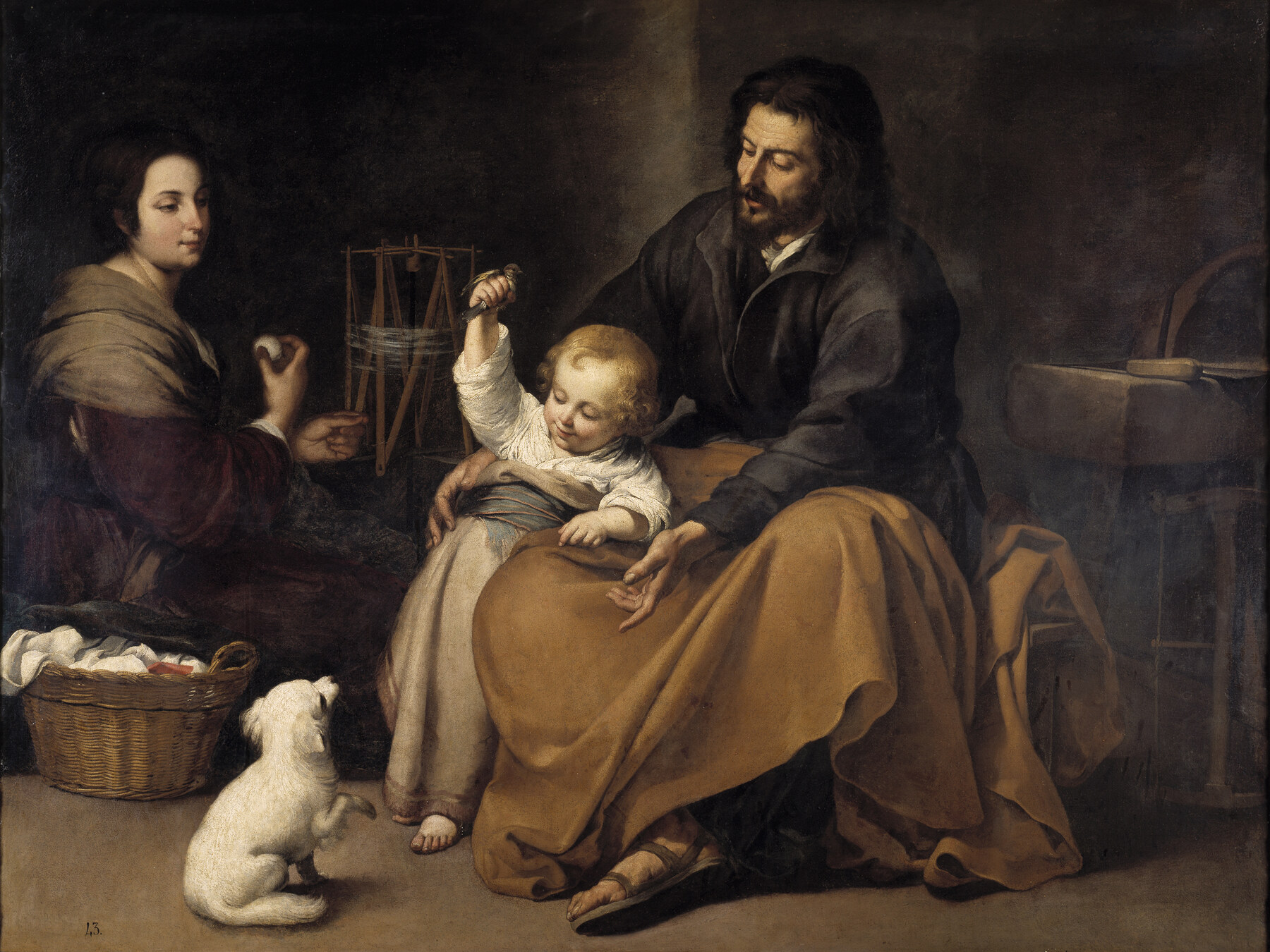
- It is where you learn who God is — and here is the heavy part: for a small child the first image of God the Father is his own father. Your marriage is the first face of God your children will ever see.
No catechism class repairs what is missing at home. One hour a week does not undo a hundred and sixty-seven.
In 2015, Louis and Zélie Martin were canonised together — the first spouses raised to the altars as a couple rather than each on his own account.
They founded nothing. He was a watchmaker, she made lace; they buried four small children, and she died of breast cancer at forty-five. Their holiness is made of bookkeeping, illness, bereavement and early Mass. One of the five surviving daughters was Saint Thérèse of Lisieux.
It took the Church two thousand years to canonise a couple simply for having been a good couple. It is worth knowing that it finally happened.
And courtship?
There is a stage almost nobody treats seriously, and it is where most of the decisions are already made before anyone notices.
To court someone is not to “try it out”. It is to discern, with purity and with honesty, whether this person is the road God prepared for my holiness — which implies being able to conclude that they are not, and leaving. Whoever starts building on sand should not be astonished when the house comes down; and a couple who cannot pray together before the wedding rarely learn to afterwards.
And those married twenty years
The vocation to matrimony was not fulfilled on the day of the “I do”. That was the ordination; the ministry is everything after.
It is fulfilled today: in the patience of putting up with the same fault for the thousandth time, in the pardon asked before sleep, in not using a child as ammunition in an argument, in going on choosing the same person after the novelty has gone. It is less epic and much harder than it looks from outside.
One request for this week
- Pray aloud, as a family, once. Not a new devotion, not a plan: once, all together, out loud. It is the greatest inheritance you can leave a child, and the only one he will be able to repeat on his own.
- If you live alone: pray for the family you came from, including for whoever hurt you.
- If your marriage is wounded: do not wait for it to pass. Take it to the Lord and to a good priest, in that order and this week.
Quod Deus coniunxit, homo non separet. What God has joined, let no one separate — and may he give us the grace to keep at home what we promised at the altar.
- Consecrated life — the previous week of the Vocations Month.
- The vocation of the laity — the week that follows.
- The priesthood was born at the Last Supper — where the series began.
- Words of the saints — a growing collection, in English and Portuguese.

Comments